An informative illustration representing the secure practices for Paripesa accounts.

Secure Paripesa Account Tips

Securing your Paripesa account is crucial for protecting your personal information and ensuring a safe experience on the platform.

This guide provides essential tips and best practices to keep your account safe and secure.

Brand Icon

Begin securing your account today.

The Basics

Quick view
Use a strong, unique password for your Paripesa account.
Enable two-factor authentication for added security.
Regularly update your app to benefit from the latest security features.

Why Trust These Tips?

  • Developed by security experts.
  • Based on best practices for online account management.
  • Backed by user feedback and continual updates.

Security Measures

An icon symbolizing security tips for Paripesa accounts.

Creating a Strong Password

A strong password is the first line of defense for securing your Paripesa account. It should be unique and complex.

Avoid common phrases and include a mix of letters, numbers, and symbols.

  • Use at least 12 characters.
  • Incorporate uppercase and lowercase letters.
  • Add numbers and special characters for complexity.
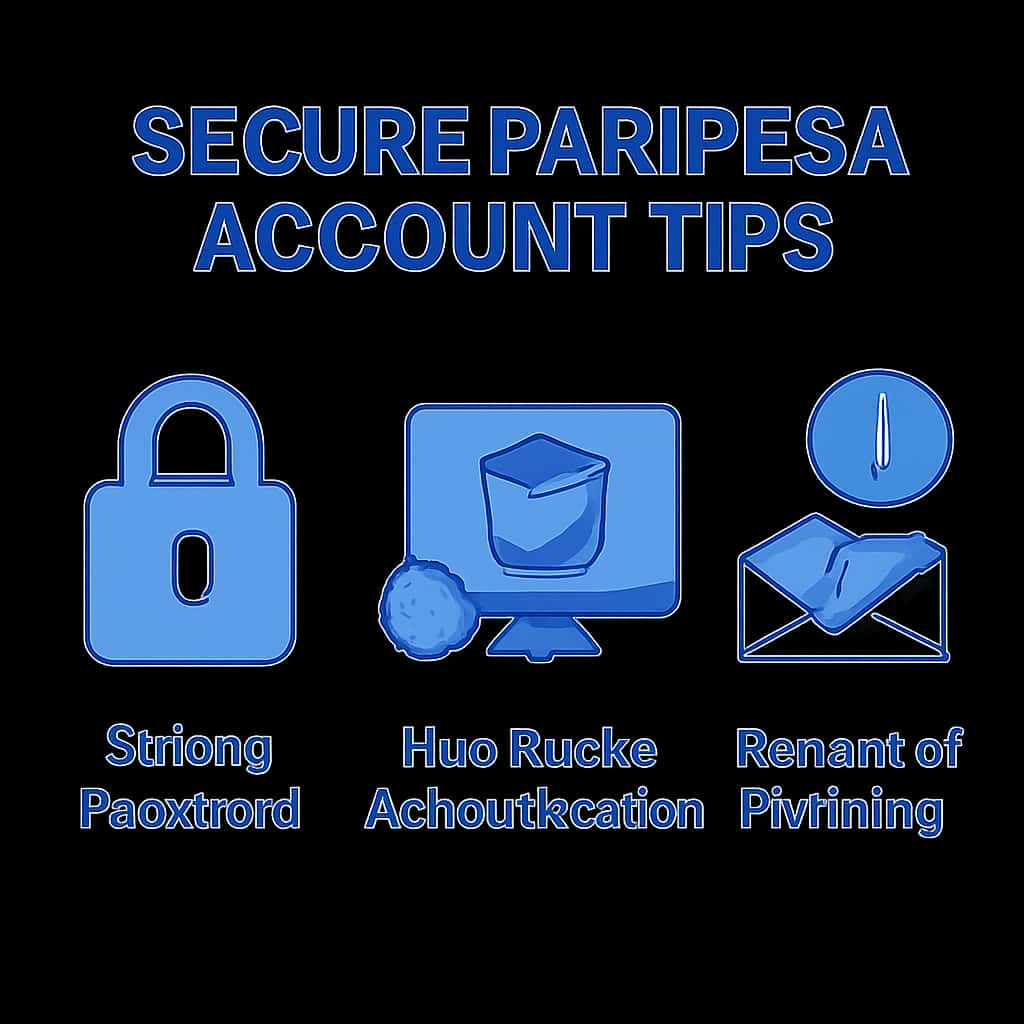
An educational diagram outlining security measures for Paripesa accounts.

Enabling Two-Factor Authentication

Two-factor authentication (2FA) adds an additional layer of security by requiring a second form of identification.

After entering your password, you'll be prompted to enter a code sent to your registered device.

  • Go to your account settings to enable 2FA.
  • Choose your preferred method of receiving codes (SMS or authenticator app).
  • Keep your recovery codes in a safe place.

Regularly Update Your App

Keeping your Paripesa app up to date ensures you have the latest security patches and features.

Check for updates regularly to maintain optimal security.

  • Enable automatic updates in your app store.
  • Check for updates manually if needed.
  • Review the update notes for security enhancements.

Be Cautious of Phishing Attempts

Phishing is a common tactic used by attackers to gain unauthorized access to accounts.

Be wary of emails or messages asking for personal information or directing you to unfamiliar websites.

  • Verify the sender's email address.
  • Look for spelling and grammatical errors in the communication.
  • Avoid clicking on suspicious links.

Monitor Your Account Activity

Regularly reviewing your account activity can help detect any unauthorized access.

If you notice anything suspicious, act quickly to secure your account.

  • Check your transaction history and login attempts.
  • Report unauthorized access immediately.
  • Update your password if you detect any anomalies.

Steps to Secure Your Paripesa Account

1

Set a Strong Password

Create a password that is difficult to guess and includes a variety of characters.

2

Enable 2FA

Activate two-factor authentication to enhance login security.

3

Keep Your App Updated

Ensure your Paripesa app is always the latest version for maximum security.

4

Be Aware of Phishing

Stay vigilant against potential phishing attempts and verify communications.

5

Regularly Review Account Activity

Check your account for any unusual activity and respond promptly.

Common Security Issues

Forgotten Password

Users may forget their password, which can lock them out of their account.

  • Use the password recovery option provided on the login page.
  • Follow the instructions sent to your registered email.

Suspicious Account Activity

Unauthorized access may lead to changes in account settings.

  • Immediately change your password.
  • Contact support through Paripesa support for assistance.

Frequently Asked Questions

To reset your password, click on 'Forgot Password' on the login page and follow the instructions.
Do not click any links and report the email to your email provider and Paripesa support.
It is recommended to avoid using public Wi-Fi for sensitive activities; use a VPN if necessary.
Keep your device updated and install security software to protect against threats.